
Search Results for
July 14, 2020
June 2020 Update on the State of Independent Federal Agencies
Over the past several years, President Trump’s assault on governing norms, from his refusal to reveal information about his finances to his glee in firing those who are not sufficiently loyal to him, has sparked public outcry. One set of norm violations, however, has received relatively little attention from the media or from Senate Democrats. Quietly, Trump and Mitch McConnell have undermined independent agencies’ functionality by slow-walking nominations. And, in particular, they have undermined the norm of statutorily-mandated political balance on many independent agency boards in a move that could keep regulatory power in Republican hands for years after Trump leaves office.
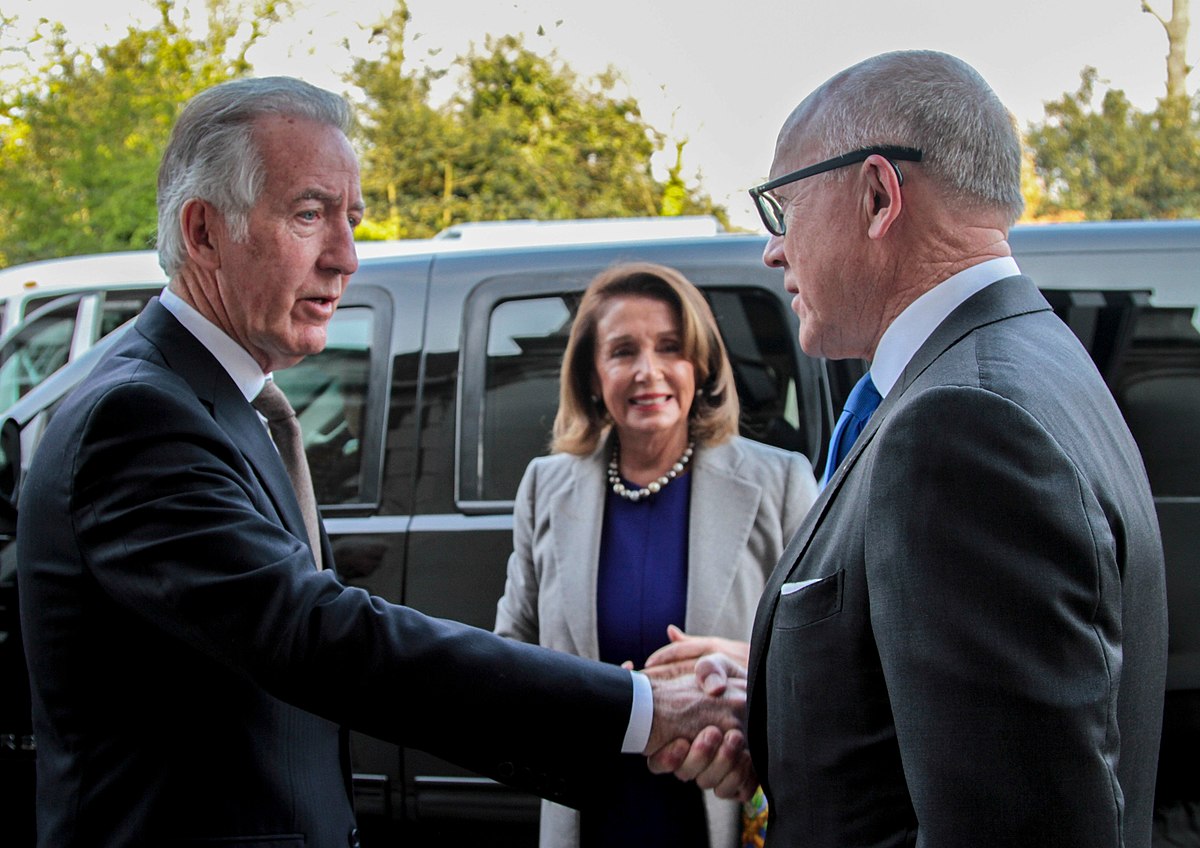
July 13, 2020 | The American Prospect
Trump’s Tax Returns Remain Hidden. Blame Richard Neal.
Don’t let the headlines fool you. The Supreme Court’s decision last Thursday in Trump v. Mazars doesn’t deserve much celebration. Although the Court upheld Congress’s right to investigate the president as a general matter, it placed new restrictions on that power and punted on the specific question at hand: Can Congress get immediate access to President Trump’s financial records through his accounting firm? With the case potentially headed for many more months of litigation, there is a significant chance the president’s records will not be made public before the election this fall.
June 24, 2020 | The American Prospect
The Quiet Seizure Of Independent Agencies
Over the past several years, Trump has repeatedly nominated, and McConnell has confirmed, unpaired Republican nominees to independent agency boards, creating persistent imbalances across the regulatory apparatus.
June 04, 2020
A Brief Introduction to Your New Comptroller of the Currency
Last month, Comptroller of the Currency Joseph Otting, announced that he would be stepping down from his post effective May 29. The former First Deputy Comptroller of the Currency, Brian Brooks, has taken his place in an acting capacity. Although he is now one of the country’s top banking regulators, Brooks – who only joined the Office of the Comptroller of the Currency (OCC) – remains a relatively unknown figure. Here is what we know (and more troublingly, what we don’t know) about the new acting Comptroller.
June 02, 2020
May 2020 Update on the State of Independent Federal Agencies
Over the past several years, President Trump’s assault on governing norms, from his refusal to reveal information about his finances to his glee in firing those who are not sufficiently loyal to him, has sparked public outcry. One set of norm violations, however, has received relatively little attention from the media or from Senate Democrats. Quietly, Trump and Mitch McConnell have undermined independent agencies’ functionality by slow-walking nominations. And, in particular, they have undermined the norm of statutorily-mandated political balance on many independent agency boards in a move that could keep regulatory power in Republican hands for years after Trump leaves office.
May 20, 2020
The Revolving Door Project Responds to Coronavirus
In the space of just a few weeks, the coronavirus outbreak has called into question almost every aspect of the political consensus of the last few decades. As it turns out, selling government for parts (aka “privatizing” or “reinventing” government), rolling back regulations, starving governing bodies of resources, and holding those who attempt to serve the public good in contempt, has left us exceedingly vulnerable.
May 19, 2020 | Washington Monthly
How Democrats Can Start to Protect America’s Food
Life under COVID-19 is awash in tragedy and frustration. People are stuck in their homes. Millions have lost their jobs. Front-line healthcare providers don’t have the personal protective gear and other equipment they need. What makes it all even worse is the sense that so much of this was avoidable.
May 11, 2020
Biden's No Trumpian Real Estate Tycoon, But Still Receives Heavy Real Estate Backing
With real estate tycoon Donald Trump in the White House, the average American is likely more aware than ever of the many ways the federal government helps to subsidize real estate profits. As the average person increasingly struggles to pay rising housing costs with stagnating wages, real estate giants make out like bandits with the help of tax loopholes and direct subsidies. Already a matter of pressing national concern, this stark disparity is only likely to become more salient in the coming months as the pandemic sheds light on the risks of our housing system’s precarity and undermines many people’s fragile grip on housing stability.
May 11, 2020
Presidential Power Map Provides Road Map to Potential 2020 Transition
The Revolving Door Project’s “Presidential Power Map” provides an easy-to-understand snapshot of 2020 Democratic presidential primary candidates’ support by sector. By breaking down high-dollar support in this way, this tool encourages users to draw direct lines between big money fundraising and a president’s choices regarding personnel and executive power. Using the “Presidential Power Map,” members of the Revolving Door Project’s team have begun to tease out these connections and to consider what they might mean for the composition and priorities of a future administration.
May 05, 2020
April 2020 Update on the State of Independent Federal Agencies
The Agency Spotlight is a unique tool which tracks appointments to agency leadership positions through the confirmation process and beyond. In order to elevate this tool we release monthly summaries of topline statistics that capture the state of the independent federal agencies.
April 28, 2020
In Interview, Donna Shalala Does Nothing to Alleviate Progressives' Concerns
Nancy Pelosi shocked onlookers earlier this month when she named freshman Representative Donna Shalala (D-FL) to the CARES Act oversight panel. Shalala had not expressed interest in the position publicly, nor does she possess specialized expertise in financial policy, congressional oversight, or law enforcement. Pelosi’s choice discouraged those holding out hope that a spirited set of appointees could somewhat overcome the panel’s structural disadvantages.
April 20, 2020
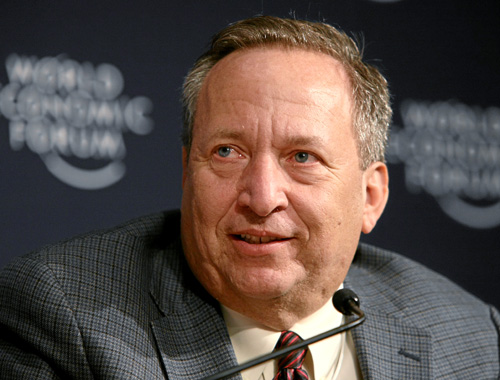
A Larry Summers Comeback Would Threaten Climate Justice
Summers’ influence has directly exacerbated our climate crisis by repeatedly halting any meaningful attempt at curbing the crisis.
April 15, 2020
Freshman Legislators Advance a Courageous Plan to Address Economic Fragility
This crisis has shattered any illusions that our post-financial crisis framework is resilient enough to withstand the challenges of the future. Coronavirus has, in particular, uncovered one of our most fundamental, persistent weaknesses: our continued inability to anticipate and prepare for new financial risks. For this ill-preparedness, we have powerful actors like BlackRock, the asset management giant and political titan, to thank. In an effort to avoid more stringent regulation, BlackRock and others not only evaded scrutiny for their own contributions to systemic risk, but virtually destroyed the mechanisms designed to examine such risk across the wider economy.
April 09, 2020 | The American Prospect
Congress Must Have Skipped the First Three Seasons of Trump Reality Show
The coronavirus pandemic created an imperative for action that even Mitch McConnell could not ignore. In the space of just a few weeks, Congress passed three major pieces of legislation, including the largest fiscal package in this country’s history. Now, however, lawmakers have hunkered down in the safety of their in-district homes, while the Trump administration sets about administering newly appropriated funds with little challenge. It is doing a predictably poor job.
April 07, 2020
March 2020 Update on the State of Independent Federal Agencies
The federal government’s independent federal agencies receive too little attention relative to their importance to our collective safety and prosperity. The Revolving Door Project has worked through multiple channels to shed light on these overlooked agencies and the threats that they face. We hope public education will generate pressure to safeguard the independence of these agencies and ensure that they are staffed with advocates for the public interest rather than corporate insiders.