
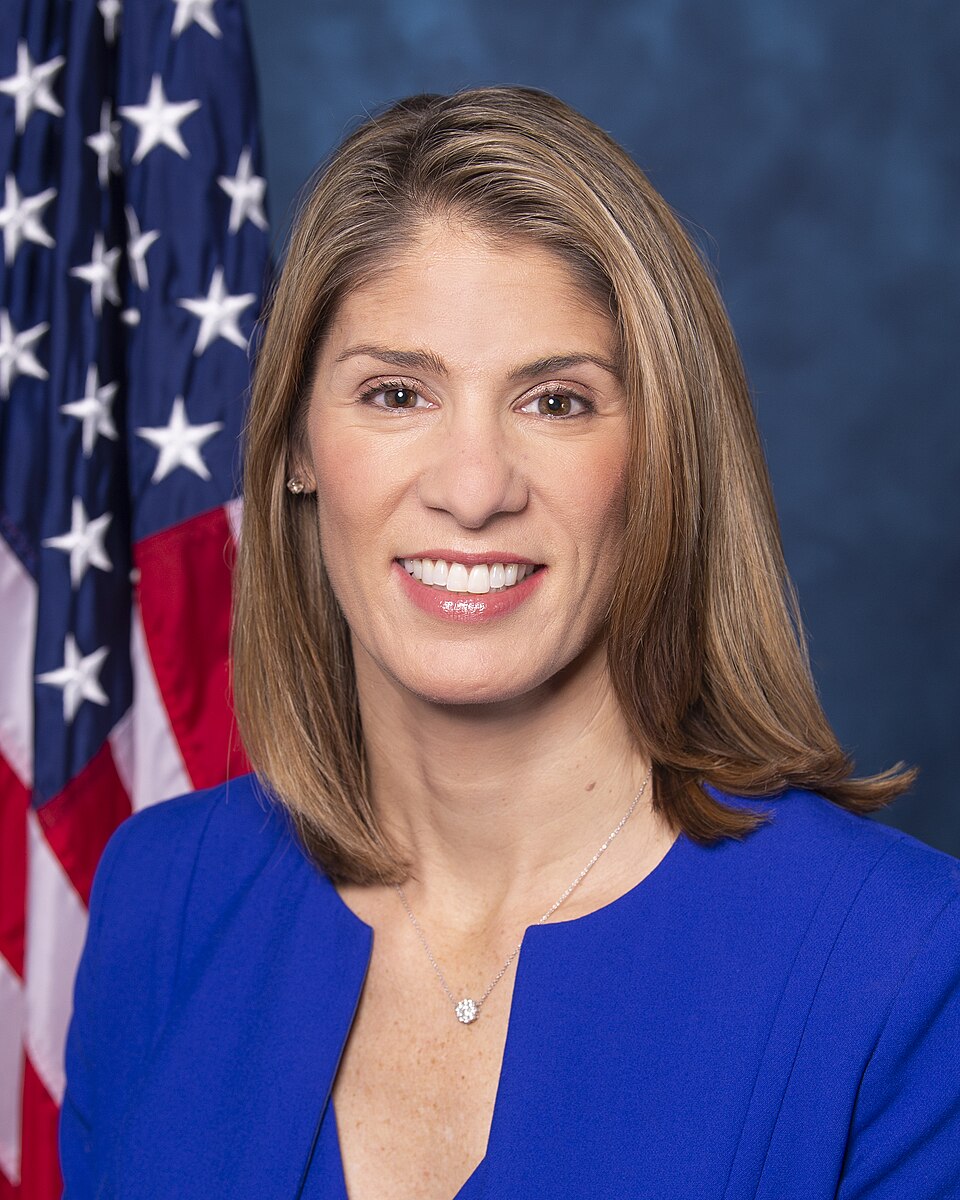
Title: United States Representative (D-MA)
Industry Affiliation: ChoiceStream, Concire Leadership Institute
- After a decade as Congressman Marty Meehan’s chief of staff, Trahan left for the private sector. She spent 6 years in senior roles at the marketing and ad tech firm ChoiceStream, from 2005-2011, becoming chief revenue officer in the final year. During Trahan’s time there, ChoiceStream operated as a “product-recommendation engine” with significant venture capital funding.
- In 2012, Trahan joined the Concire Leadership Institute as CEO. According to a profile on Trahan published in Roll Call, Concire is a consulting firm which was founded to specialize in “improving employee morale”–as CEO, Trahan focused the business’ work on “creating work environments where diversity can flourish.” One of Trahan projects was to advise Uber–a company with a long history of scandals related to sexual harassment, discrimination, and unethical treatment of workers–on how to encourage more female drivers to work for the firm. The Concire Leadership Institute closed when Trahan was elected to Congress in 2019.
Congressional Actions
- Reps. Trahan and Jay Obernolte (R-CA) introduced a new draft of their signature AI regulation in late July 2026, now called the FRONTIER Act. They claim that the new wording should satisfy critics of the initial draft language they released the month prior. However, within a day of releasing the new wording, the tech ethics watchdog Americans for Responsible Innovation released a statement outlining major outstanding issues. One issue ARI identified was the narrow focus on legislating catastrophic risks, an approach that some actors in the AI industry, including Anthropic, have long championed. Another issue ARI identified was that the bill would allow AI companies “to perform a cost-benefit analysis on whether deployment of a high-risk model is acceptable”–a provision which is likely to undercut real government enforcement of the provisions designed to hamper AI’s unintended consequences.
- Rep. Trahan is one of the House’s leading Democratic voices on AI–largely owing to her collaboration with Obernolte on legislation that would solidify the state-level preemption that many AI hyperscalers are eager for. The two released draft language in early June 2026 and received a tepid response from both sides of the aisle and criticism from watchdoggroups and organized labor.
- At the time, Politico reported: “The tech lobby was perhaps the only group in Washington with nice things to say about Obernolte and Trahan’s framework.” For example, a lobbyist at DLA Piper working to deregulate AI praised the framework for “thread[ing] the needle” on preemption.
- Trahan also cosponsored a bill introduced by Obernolte called the AI Security and Innovation Act to “ensure continued United States leadership” in AI research and development. The act would allow the Secretary of Commerce to establish a “Center for AI Security and Innovation.” The act would appropriate $20 million per year between 2027 and 2032, to measure the risks of AI models, support exchange of information between “non-governmental entities and Federal departments” and to “ensure continued leadership” of American AI.
- Implementation would be left to Howard Lutnick, former head of the investment bank Cantor Fitzgerald. Lutnick famously said in a CNBC interview that young workers should prepare to work in factories to build consumer tech for big tech: “This is the new model, where you work in these [factory] plants for the rest of your life, and your kids work here, and your grandkids work here.”
Revolver/Government Experience
- Trahan worked in the office of Congressman Marty Meehan (D-MA) from 1995 to 2005, eventually becoming his chief of staff. Shortly after Trahan left for the private sector, Meehan’s staff admitted to “deleting unflattering information about a broken campaign promise from [Wikipedia].”
- Trahan was first elected to the House in 2018, to succeed Niki Tsongas. As of 2026, Trahan holds a number of leadership positions in the House, co-chairing the Democratic Policy and Communications Committee and serving as a senior whip. She sits on the House Committee on Energy and Commerce, as well as its subcommittees for health, commerce, manufacturing & trade, and oversight & investigations.
- Within the House E&C Committee, Trahan cosponsored the Office of Fusion Act of 2025 introduced by Rep. Donald Beyer (D-VA). The act would establish federal support for private ventures in the fusion technology sector, tech that the AI industry sees as a necessary component of powering their future data center operations. OpenAI CEO Sam Altman, for example, has investments in multiple private fusion companies like Helion and Oklo. Bob Mumgaard, CEO of another private fusion leader Commonwealth Fusion Systems is a member of Trump’s science council.
- The fusion sector promises to make real progress on a scientific problem that’s stumped physicists for generations, thus bringing immense amounts of clean energy to the grid through new tech. However, as the physicist-turned-journalist Adam Becker wrote in Fortune, “there’s danger that the hollow promise of near-term fusion will be floated as a panacea, used as an excuse to ignore faster avenues to decarbonization and to use even more energy right now.” In short, Obernolte’s support for the fusion sector may end up enriching a small group of tech VCs and private firms promising unrealistic timelines while crowding out green energy.
- Within the House E&C Committee, Trahan cosponsored the Office of Fusion Act of 2025 introduced by Rep. Donald Beyer (D-VA). The act would establish federal support for private ventures in the fusion technology sector, tech that the AI industry sees as a necessary component of powering their future data center operations. OpenAI CEO Sam Altman, for example, has investments in multiple private fusion companies like Helion and Oklo. Bob Mumgaard, CEO of another private fusion leader Commonwealth Fusion Systems is a member of Trump’s science council.