
The White House has relentlessly undermined disaster readiness and response capacity. When things go wrong, the opposition should make the president and his GOP accomplices pay a political price.
This newsletter was originally published on Watchdog Weekly. Read and subscribe here.
The United States got incredibly lucky in 2025 when no hurricanes made landfall—something that hadn’t happened in a decade. But our meteorological luck is bound to expire eventually, at which point the lethal effects of the Trump administration’s assault on climate science, weather forecasting, disaster management, and preventive investments in green infrastructure and clean energy will almost certainly be laid bare.
It’s critical for the public to draw the correct political conclusion: climate denialism plus the eradication of public good-oriented government is a surefire recipe for pointless mortality and hardship. Democrats can help spell that out if they’re ready to strike while the iron is hot. The opposition has an obligation to place blame where it belongs: on President Donald Trump’s misanthropic regime. They need to do so quickly (while maintaining factual accuracy), in the hours and days after a hurricane hits when more people than usual are paying attention, and then regularly riff on those themes. And sketching out a humane alternative wouldn’t hurt; not simply a return to the pre-Trump status quo, but an ambitious vision for creating a more affordable, egalitarian, and democratic society while lowering emissions and protecting people from extreme weather.
The Atlantic hurricane season runs from June 1 through November 30. The National Oceanic and Atmospheric Administration (NOAA) is anticipating a below-average year: eight to 14 named storms, of which three to six are expected to become hurricanes, with one to three of those becoming major (category 3 or higher). The expected development of potentially historic El Niño conditions, which would interact with the fossil fuel-driven climate crisis, is raising fears about record-breaking temperatures and the damage they bring. Although a strong El Niño can suppress Atlantic hurricane formation and intensification by increasing tropical Atlantic vertical wind shear, warm ocean temperatures (particularly in the western Atlantic) could counteract El Niño’s tendency to temper storms. More importantly, it only takes one hurricane making landfall in a densely populated area to wreak havoc.
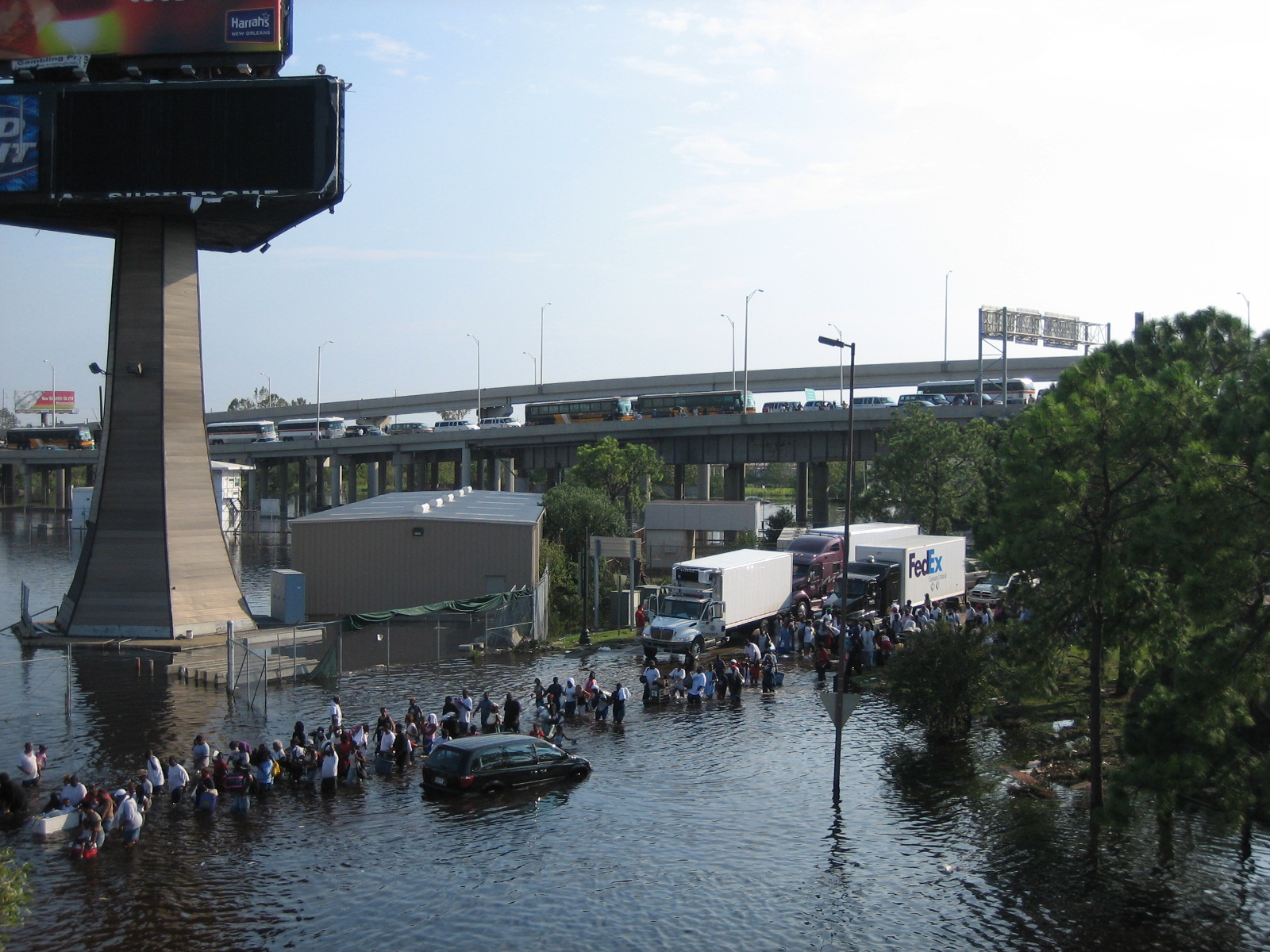
If and when a hurricane unleashes widespread death and destruction (if not in 2026, it could be in 2027 or 2028), Democrats should make Trump and his Republican accomplices pay a steep political price for deliberately putting people in harm’s way. Even if a Katrina-scale calamity occurs years from now, under a different administration, the Trump regime’s fingerprints will be all over it. That’s because, as one former Federal Emergency Management Agency (FEMA) official put it, “it’s going to take a decade to rebuild FEMA from the catastrophic damage” that former Department of Homeland Security (DHS) Secretary Kristi Noem inflicted. The same can be said about NOAA and its diminished National Weather Service (NWS), along with other Trumpified agencies. Moreover, Trump’s hostility to renewables and support for planet-heating fossil fuels is exacerbating climate breakdown, leaving us with more powerful future storms.
Besides Trump and Noem, DOGE figurehead Elon Musk and Office of Management and Budget (OMB) Director Russell Vought warrant special mention. The DOGE blitz has generated terrible harm at home and abroad. Meanwhile, during and after Musk’s official White House stint, “Shadow President” Vought has abused his power to impose, through mass federal workforce cuts and unlawful impoundment schemes, the far-right vision he outlined in Project 2025. The Trump regime’s reckless attacks have undermined public interest functions as basic and important as collecting climate data; monitoring and warning about severe weather; and preventing, mitigating, preparing for, responding to, and recovering from disasters. This has set the stage for, among other things, catastrophic hurricane outcomes.
How Trump Undermined Our Hurricane Readiness and Response Capacity
As greater climate chaos is locked in due primarily to the activities of Donald Trump’s allies in the oil and gas industry, the White House’s reactionary policy choices—slashing agency staff, replacing experienced leaders with unqualified right-wing ideologues, and curtailing the flow of congressionally appropriated funds—are leaving our society ill-equipped to plan for, withstand, and bounce back from worsening extreme weather, including hurricanes.
Here’s a quick rundown of the Trump administration’s troubling policy moves across three dimensions:
Hampering Storm Predictions and Warnings
- Pushing out thousands of NOAA workers, including hundreds of NWS employees.
- Scaling back lifesaving operations in response to self-imposed staffing and funding constraints.
Hindering Disaster Preparedness, Response, and Recovery
- Gutting FEMA’s staff, namely pushing out thousands of rank-and-file workers and dozens of veteran leaders.
- Leaving key leadership positions unfilled and/or empowering pro-Trump loyalists who have obstructed planning and training activities.
- Disrupting the flow of billions of dollars in federal funding that state and local governments need to prepare for and respond to extreme weather events.
Impeding Disaster Prevention and Mitigation
- Thwarting investments in disaster risk reduction, from slashing emissions to pursuing just and sustainable urban development.
- Eliminating efforts to reduce disaster-related inequities.
[For a detailed overview, see this blog: “How Trump Undermined Our Hurricane Readiness and Response Capacity”]
Last-Minute Reversals Can’t Undo Severe Damage
Since Markwayne Mullin took over as DHS Secretary in late March, he has taken steps to repeal some of his predecessor’s most egregious policies. Most notably, Mullin followed through on his confirmation hearing vow to reverse the de facto spending veto he inherited from Noem. The allocation of Hazard Mitigation Grant funding has ticked up recently, and FEMA whistleblowers who were put on administrative leave last year after warning about a potential Katrina repeat have been reinstated. Those moves underscore why FEMA workers called Noem a “singularly destructive force.” However, they can’t remedy the damage that Noem, Trump, and Vought unleashed over the course of more than a year.
Worryingly, Mullin refused to commit during his confirmation hearing to halting Noem’s devastating cuts to FEMA’s workforce. Mullin baselessly asserted that some federal agencies “got very bloated.” When asked if he thinks FEMA is overstaffed, he declined to answer, adding, “When I get there, we’ll be adequately staffed to respond to our nation’s disasters.” However, that would require a mass hiring campaign, and FEMA’s current bid to fill a few hundred positions is extremely modest. Hiring thousands of people would be a good start, but even that wouldn’t make up for the collective decades of lost expertise and leadership.
Preparations for hurricane season were supposed to begin months ago, but like last year, planning was derailed by the Trump administration. In sum, it’s difficult to disagree with this assessment from Sabotaging Our Safety: “FEMA is a hollowed-out shell of an agency, utterly unprepared to face even a moderate emergency—let alone a large-scale disaster like Hurricanes Katrina or Helene.”
Why Democrats Should Politicize the Coming Hurricanes
The 2025 Atlantic hurricane season is a reminder that we don’t know exactly what will happen with tropical cyclones projected to form in 2026 (possibilities include Hurricane Hanna, Hurricane Kyle, Hurricane Sally, etc.). But we do know that the Trump administration has willingly increased the probability of adverse outcomes.
To politicize a disaster is to denaturalize it, i.e., to elucidate how it was produced and to condemn the injustices associated with its production. One potentially potent way to foreground the man-made dimensions of a future catastrophe is to describe how Hurricane Trump, Hurricane Vought, etc. has rendered an actual hurricane more detrimental than it otherwise would have been—focus, in other words, on the policy storms that precede and shape how our society absorbs physical storms.
Historically, Democrats have shied away from politicizing extreme weather events, opting, like Republicans, to characterize them as “acts of God.” This is a mistake. Such apolitical language treats negative outcomes as inevitable. But the likelihood, scale, and unequal impacts of every disaster are determined by policy choices made before, during, and after a storm (or heat wave, wildfire, etc.) arrives.
Weather-related disasters are inherently political—they’re the byproducts of collisions between environmental hazards and socially produced patterns of uneven vulnerability. Robust investments in disaster risk reduction and preparedness save lives. Given that hazards have been turbocharged by planet-heating fossil fuel pollution and vulnerability made worse by public disinvestment and deregulation, we’re dealing with neoliberal climate disasters, not “natural” ones.
Accountability and progressive social change depend on connecting the dots between right-wing policymaking and deleterious consequences—and communicating those links effectively and consistently to the public. There’s a reason why, in the wake of last summer’s deadly Texas floods, when federal and state GOP culpability was obvious, Trump White House spokesperson Karoline Leavitt and Texas Gov. Greg Abbott (R) objected to assigning blame. Portraying something as an unavoidable tragedy makes it easier to let responsible actors skate by. And silencing critics with “now is not the right time” platitudes postpones necessary political-economic transformations, ensuring the continuation of the fatal status quo.
It’s plausible that Democrats’ longstanding reluctance to assign blame stems from a recognition that they too have contributed to worsening inequality and thus susceptibility to various shocks and crises. Don’t throw stones if you live in a glass house and all that. But the calculus needs to change because today’s ongoing obliteration of the public good is clearly attributable to Trump’s Republican Party and his executive branch, led by Vought. Failing to villainize the anti-democratic MAGA forces most responsible for causing preventable suffering and death is political malpractice.
The above photo shows people trying to leave New Orleans in the wake of Hurricane Katrina. It is licensed under CC BY-NC-ND 2.0.