
OMB Director Russell Vought is playing political games with people’s lives and homes as the climate crisis continues to wreak havoc on communities.
This newsletter was originally published on our Substack. Read and subscribe here.
Note: This newsletter is slightly modified excerpts of a report published on Revolving Door Project’s website. For a deeper dive into Vought’s fiscal retaliation campaign and the resulting material harms to people, please see the report here.
In last week’s Watchdog Weekly newsletter, we wrote about how Russell Vought, Trump’s director of the Office of Management and Budget (OMB), is waging a war against “wokeism” and “fraud” as a sham justification for freezing, cutting, and withholding federal funding for essential programs like public health in Democratic-led cities and states. This week, we take a closer look at how Vought’s fiscal retaliation campaign against Trump’s perceived political opponents extends to federal funding for disaster relief and climate resilience programs, leaving Americans on the frontlines of the burgeoning climate crisis unprepared and unprotected.
Disaster Relief
Vought’s recommendations for fiscal year 2026 discretionary funding levels, which were issued in May 2025, evinced antipathy towards what Vought characterized as “wasteful and woke FEMA grant programs,” claiming that “FEMA discriminated against Americans who voted for the President in the wake of recent hurricanes, skipping over their homes when providing aid.” (An investigation by FEMA’s Office of Professional Responsibility found “no evidence” that FEMA ordered employees to skip pro-Trump homes when providing assistance to victims of Hurricanes Helene and Milton.)
Perhaps it is no surprise then that in February 2026, the Trump administration excluded four Democratic-led states—California, Colorado, Illinois, and Minnesota—from the release of more than $5 billion in overdue disaster aid to states. An amended complaint filed on March 3, 2026 in a lawsuit initiated by the four affected states against Vought in his official capacity as OMB Director and other defendants (the “Illinois v. Vought” lawsuit) confirmed that these states have not received any of these funds and alleges that lack of disaster aid funding will cause irreparable harm.
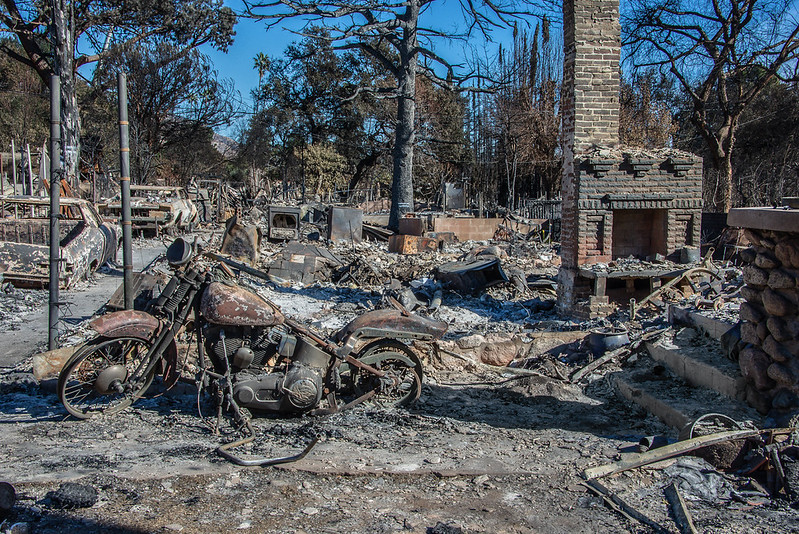
According to the amended complaint, without the funds, California’s long-term recovery efforts from the devastating January 2025 Los Angeles wildfires will be delayed, as will refinements to prevention and mitigation strategies for later wildfires, which are only becoming more and more dangerous due to climate change.
In Colorado, the loss of disaster funds risks wildfire harm reduction efforts. These funds were meant to go towards reducing “hazardous fuels along 47 miles of critical road infrastructure and adjacent private properties to provide a safer environment for thousands of residents and businesses” and protecting “critical community infrastructure, including: 41 dams, 35 schools, 15 fire and EMS stations, 4 hospitals, 4 power plants, 3 wastewater treatment plants, and a water treatment plant.”
During spring and summer of 2024, Minnesota experienced severe flooding, which left some communities submerged under water and resulted in damaged homes, businesses, and roads. One year on, communities were continuing to struggle to recover. According to the state, the delay in federal funding hampers recovery efforts and improvements to address future natural disasters in the area.
Meanwhile, Illinois has used past funding “to conduct search and rescue operations in the immediate aftermath of a disaster, provide food aid, debris removal, and permanent work including the repair of roads, bridges, water control facilities, buildings and equipment, utilities, ports, recreational areas, and other physical infrastructure.” The loss of disaster recovery funding impedes these efforts, putting people’s lives and homes in harm’s way.
Crucially, a preliminary injunction granted by the court in March 2026 does not apply to disaster aid funding, meaning disaster recovery and reduction operations in the four states remain handicapped.
Clean Energy
In his fiscal year 2026 discretionary budget request, Vought vowed to slash funding for Green New Deal programs designed to build climate change resilience, which he referred to as the “Green New Scam.” His proposal recommends eliminating funds for “unreliable renewable energy.”
Accordingly, during the fall 2025 government shutdown, Vought canceled $7.6 billion in clean energy projects in 16 states that backed Democrat Kamala Harris in the 2024 presidential election. The affected states were: California, Colorado, Connecticut, Delaware, Hawaii, Illinois, Maryland, Massachusetts, Minnesota, New Hampshire, New Jersey, New Mexico, New York, Oregon, Vermont, and Washington state.
Vought admitted that the funding was yanked as part of a politically motivated assault against “the Left’s climate agenda.” Indeed, despite the government shutdown at the time, the Department of Energy remained open and operational due to unexpired finances.
Trump’s political enemies may have been Vought’s intended target, but his real victims were average Americans, especially low-income communities of color, who are increasingly facing the devastating impacts of fossil-fueled climate change. Environmental disasters are becoming more extreme as a result of climate change, while continued dependence on fossil fuels is leading to higher costs for consumers.
“This is a shameless and vindictive attack by Director Vought, which will eliminate jobs and raise energy costs for Americans across the country,” said House Appropriations Committee Ranking Member Rosa DeLauro (D-CT). “This was obviously designed as a political attack by the White House targeting Democrats. But the sad reality is that Americans—the middle class, working class, and vulnerable—who voted for both Democrats and Republicans will be hurt by this. This is divisive, it is petty, and unfortunately it is exactly what we have come to expect from President Trump and Russ Vought.”
Julie McNamara, associate policy director for the Climate Energy Program at the Union of Concerned Scientists, a nonprofit organization that advocates for a healthy planet, similarly said: “These cuts will increase consumer costs, undermine grid reliability and deepen the nation’s overreliance on harmful fossil fuels. By also slashing support for research and innovation at the frontiers of advanced manufacturing and clean technologies, the Trump administration is hamstringing the country’s capacity to lead on the technologies and jobs of the future.”
In January 2026, a federal judge ruled that the Trump administration’s actions were illegal and vacated the award cancellations. As of now though, there is nothing to stop Vought and the Trump administration from re-terminating the funds. In fact, just ten days after the court found the administration’s actions to be unlawful, Vought’s OMB ordered a federal funding review for fourteen states, plus D.C., “to facilitate efforts to reduce the improper and fraudulent use of those funds[.]” Many of the states subject to this initiative overlap with the states who had their funding for clean energy projects pulled. They include California, Colorado, Connecticut, Delaware, Illinois, Massachusetts, Minnesota, New Jersey, New York, Oregon, Rhode Island, Vermont, Virginia, and Washington, all of which supported Harris in 2024.
Electric Vehicle Charging
Vought’s proposal on “Ending the Green New Scam” also seeks to cancel funds for “wasteful and ineffective [electric vehicle (EV)] charger programs.”
And that’s exactly what the Trump administration has done. The March 3, 2026 amended complaint in Illinois v. Vought stated that the administration canceled $900 million in transportation funding to the same four blue state plaintiffs: California, Colorado, Illinois, and Minnesota. This action was allegedly aimed at eviscerating the Charging and Fueling Infrastructure program, which assists states in broadening access to EV charging “along major transportation corridors and in underserved communities.”
In Illinois, the funds were supposed to help “build 14 charging plazas along major freight routes,” whereas in California, Colorado, and Minnesota, they were slated to help build EV chargers that “serve renters, rural drivers, low- and moderate-income neighborhoods, and other areas where drivers cannot charge vehicles overnight in a home or garage.”
Like the billions of dollars in withheld disaster recovery funding, the terminated transportation funding was not covered by the court’s preliminary injunction.
Follow the Revolving Door Project’s work on whatever platform works for you! You can find us on Bluesky, Twitter, Instagram, and Facebook.
Want more? Check out some of the pieces that we published or contributed research or thoughts to in the last week:
Why Are Any Democrats Supporting a Bill That Was Championed by the Crypto Industry?
The U.S. Government Isn’t Prepared To Protect Us From Artificial Intelligence
Map: Trump Has Often Delayed or Denied Disaster Aid
RDP Condemns the Blockchain Association’s Deceitful Letter From “Law Enforcement Officials”
Can Democrats Learn From the 2024 Loss?
Crypto Clarity Act in spotlight for bad-actor provisions as Senate process grinds forward
Prediction Markets Are Learning From the Addiction Industry
Bold Solutions to the Home Insurance Crisis
Image: The aftermath of Los Angeles’ January 7, 2025 Altadena (Eaton) Fire. Credit: “024_Altadena Fire” by Russ Allison Loar, February 14, 2025, CC BY-NC-ND 2.0
Related Articles
September 23, 2026
Russell Vought’s Continued War on Public Health
September 23, 2026
Map: Trump Has Often Delayed or Denied Disaster Aid
September 22, 2026
This Office Was the Best Defense Against Discrimination in Schools. Trump Destroyed It.
September 21, 2026