
While Trump threatened Canada over wildfire smoke, climate-hushing Democrats missed the moment.
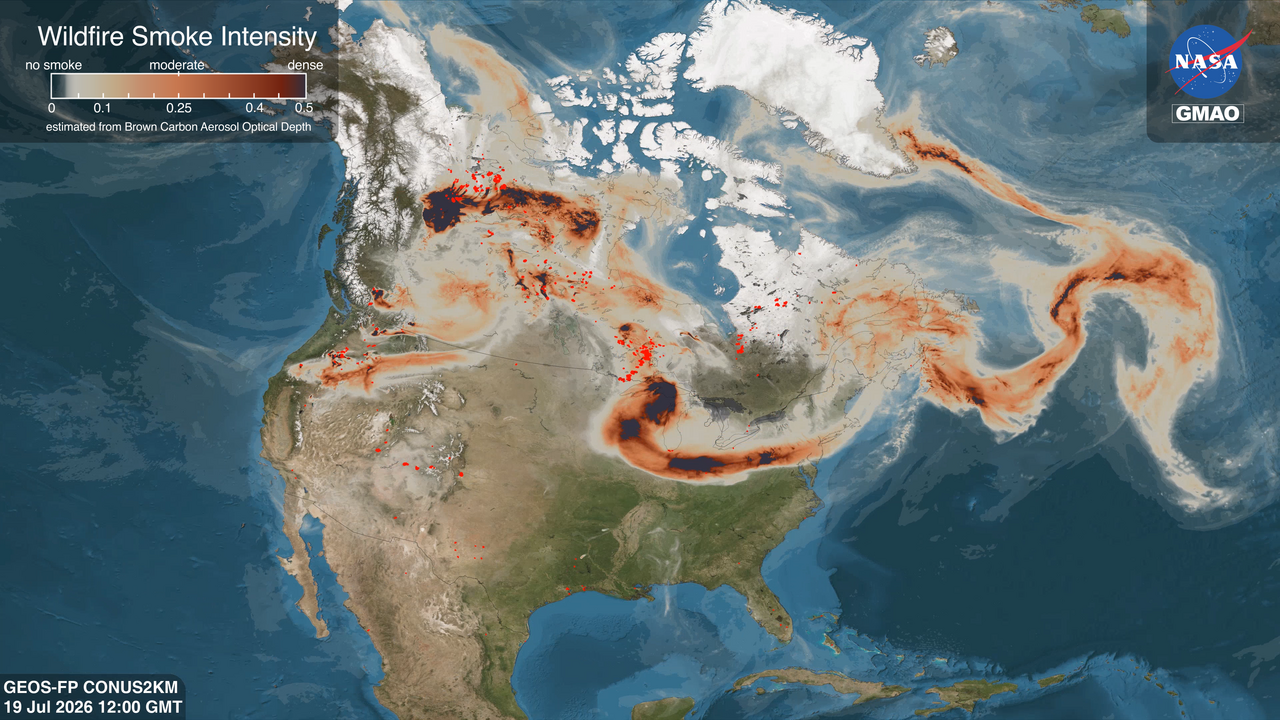
Image: A NASA visualization of the toxic smoke plume from Canadian wildfires over North America, July 14-19, 2026.
_(SVS5665_-_WithActiveFireLocations_07202026_3840x2160).png)
Last week, well over 100 million people across the United States and Canada were forced to breathe dangerously unhealthy air, as smoke from hundreds of wildfires in Canada blanketed much of North America.
Climate change has made wildfires both more frequent and more severe, and they’re expected to continue to intensify as the world hurtles into ever-warmer global temperatures. A 2023 United Nations report projects a 14 percent global increase in the number of extreme fires within this decade, doubling by the end of the century.
Entire states like Minnesota and Wisconsin experienced their worst air quality in recorded history, as did several major cities including Chicago, Milwaukee, Columbus, and Detroit. Twenty million people in the New York City metropolitan area suffered their second-worst smoke event, a record broken only by June 2023’s Canadian wildfire smoke.
We don’t yet know how many people will die prematurely from smoke inhalation last week, but tens of thousands will. Inhaling wildfire smoke is often compared to chain-smoking in order to illustrate its harms, but it is even more of a health hazard than cigarettes, car exhaust, and other forms of air pollution because of all the toxins released when inorganic materials like buildings and cars burn. Scientists have estimated that the June 2023 smoke event caused 5,400 acute deaths and 82,100 premature deaths.
For comparison, approximately 20,000 people die from homicides each year in the United States. A 2025 study found that homicides receive 4,300% more media coverage than their share of deaths. Our collective sense of what is most dangerous in society is terribly warped by what the media decides merits attention.
The mainstream media appears to be getting worse at educating the public about climate disasters. Climate coverage on major U.S. broadcast networks decreased by 35 percent during the first year of the Trump administration. As Adam Johnson reported on Monday, ABC, NBC, and CBS News all managed to cover toxic wildfire smoke and deadly floods in their nightly news reports without mentioning climate change once, let alone its cause: the continued burning of fossil fuels.
If we treated air pollution as the staggering public health burden that it is, the urgency of phasing out fossil fuels would be undeniable. Perhaps that’s why our political elites are so committed to not connecting the dots, even when a large swath of the country is suffering from a major climate event both visible and felt.
How did our elected officials in Washington respond to the wildfires last week?
Trump spent last week photobombing the Spanish national team’s World Cup victory, threatening National Academies researchers with a suspension and debarment investigation over their contributions to climate science research, and threatening Canada with retaliatory tariffs in response to the smoke. Congressional Republicans jumped on the “threatening Canada” bandwagon, with Ohio Republican Senator Moreno introducing a bill that would sanction Canada, revoke visas for Canadian officials, and direct Secretary of State Marco Rubio to consider Canadian diplomats “persona non grata.” (Yes, really.)
Democrats in Congress offered no counternarrative to shape the news cycle around the wildfires, and Trump’s blame game became the national story, as he certainly wanted. This is why Democrats’ “climate hushing” trend is so self-defeating, ceding important space to the vocal climate deniers at our government’s helm. (For a great read on why climate politics can’t wait, check out Aaron Regunberg’s latest in Boston Review.)
What could our representatives in Congress have done last week to drive home the idiotic inadequacy of our climate-denier-in-chief’s response to the toxic smoke immiserating Americans?
They could have held a press conference on the Capitol steps, hazy orange sky hanging over them. Speaking to the millions of Americans enduring this health hazard, they could have urged people to protect themselves with masks, air purifiers, and limited time outdoors. They could have acknowledged that the planet is warming and these unprecedented fires are becoming increasingly common. They could have blamed the fossil fuel industry for choosing to set the world on fire, noting that the U.S.’s planet-warming emissions are increasing because our current administration has chosen oil, gas, and coal companies’ profits over the rest of us.
They could have connected the dots on where much of that new demand for polluting energy is coming from: the AI boom, with tech elites insisting that we need to build out massive new gas power plants to fuel generative AI, a product that seems likely to hurt more people than it helps.
They could have given a platform to families from their states or districts who have lost homes and loved ones to wildfires intensified by climate change-fueled drought and extreme heat. They could have engaged with family-oriented content creators about the health implications of wildfires for children, and of climate change generally, validating the concerns of parents raising children on a warming planet, and raising the floor of general knowledge.
They could have pointed out that this administration is undermining our wildfire and disaster preparedness, denying disaster relief requests from Democratic governors, and walking back Biden-era progress on protecting workers from extreme heat on the job.
They could have condemned the president and those in Congress for their useless and heartless politics of distraction, trying to deflect from the culpability of their fossil fuel industry donors by threatening Canada instead of sending firefighters to help Canada battle the blazes, as Canada routinely does when the U.S. has major wildfires.
They could have moved forward legislation like the Wildfire Smoke Emergency Declaration Act of 2026 that would unlock resources for communities dealing with just this sort of crisis.
As I’ve previously written for this newsletter, the question isn’t whether Democrats should talk about climate change, but how. A majority of Americans are more pessimistic and worried about climate change than ever, and want the federal government to be doing more. While for now the consensus among political elites appears to be “Don’t Look Up,” that mentality is more detached than ever from the American people, 100 million of whom looked out their windows last week on the toxic miasma of a fossil-fueled world.
Want more? Check out some of the pieces that we published or contributed research or thoughts to in the last week:
Map: Trump Has Often Delayed or Denied Disaster Aid
After Industry Request, OSHA Moves to Roll Back Ladder Safety Regulation
CFPB Nominee Will Keep Capital One Bonus Payments
Donald Trump, the No-Bid President
Clarence Thomas Pal Harlan Crow Maxed Out Donations to John Fetterman
How Donald Trump Created the Worst Diarrhea Outbreak This Century