
The Trump administration is all-in on corruption, pollution, and depredation.
This article was originally published on Watchdog Weekly. Read and subscribe here.
Welcome to Revolving Door Project’s Corruption Calendar, where we provide in-depth explanations of the material consequences—real and potential—of the Trump administration’s corrupt policymaking, with an emphasis on tangible harms to working people. Read our first thirty-eight issues here, and follow us on Bluesky and X for more updates on this work.
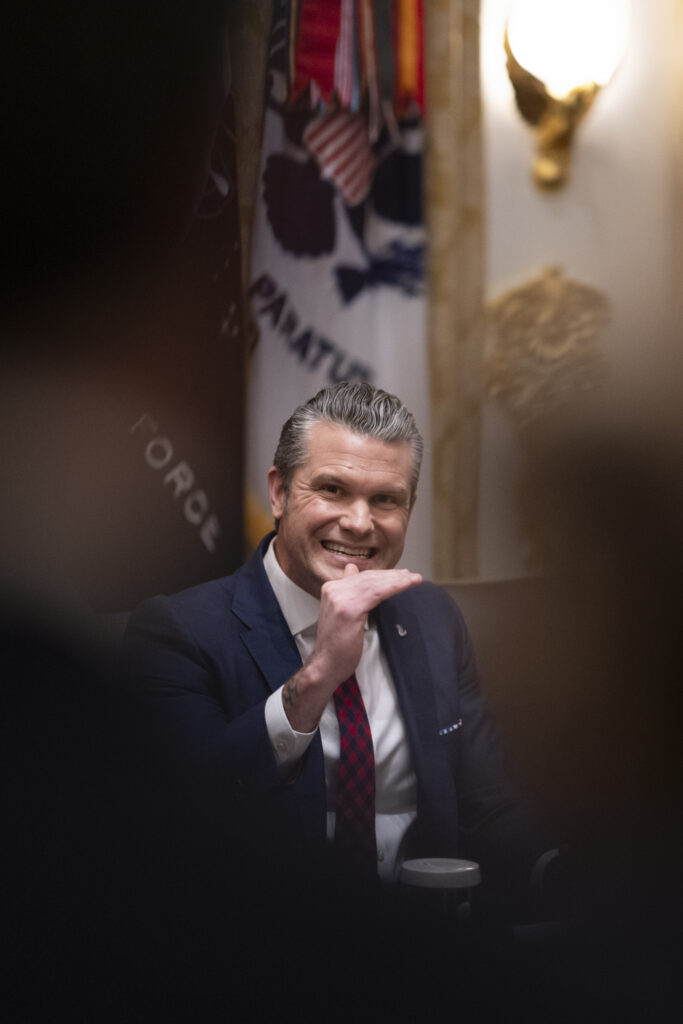
The big story in Washington this past week is the state-sanctioned murder of the two survivors of the navy seal team’s initial missile strike on a boat supposedly harboring illegal narcotics. The order to “kill them all” apparently came from Secretary of War Pete Hegseth, who’s feverishly executed the Trump’s administration professed war on narco-terrorism. It’s difficult to square the heartless order to show no quarter with the president’s decision to pardon former Honduran president Juan Orlando Hernández, an actual renowned drug trafficker. It seems that Trump’s supposed animus toward narcotics is no match for his affinity for other “crooks in high places.” Trump also can’t resist throwing his tech friends a bone, so Hernandez’s association with Prospera, the tech bros’ freedom city, has probably saved him from a lifetime behind bars.
No doubt Secretary Hegseth will attempt to shift the blame for this soulless strike to Adm. Frank Bradley and the rank and file. After all, then-national security adviser Mike Waltz ate most of the blame for signalgate. But oversight is a long game. It’s absolutely critical that Congress thoroughly investigates this strike and informs the public of Hegseth’s true responsibility, especially as the administration continues to gin up the war machine for an incursion into Venezuela. FIFA may be committed to the charade of anointing Trump as the president of peace, but Congress has tools for holding the executive branch accountable.
Now for some other troubling developments.
All-In on Corruption
The Inside Man
This past Sunday, the New York Times released a bombshell report revealing how David Sacks—Silicon Valley’s man in the White House—has leveraged his role as the AI and crypto czar to “benefit himself and his friends.” Sacks is a Special Government Employee, a designation the Trump administration has utilized to effectively evade the ethics requirements most civil servants face. It’s not clear how Sacks has yet to exceed the key SGE guardrail, a provision which limits SGEs to 130 days of service in a 365 day period, but there’s nothing stopping Congressional offices from digging into this.
Sacks currently splits his time between the White House, his venture capital firm Craft Ventures, and the All-In podcast, directly influencing policy critical to his friends’ bottom lines. As the Times tells it, the Paypal alumnus has “pushed to eliminate government obstacles facing A.I. companies” such as Nvidia, regularly overriding the recommendations of other White House officials. His personal portfolio has also likely blossomed from his policy decisions as his financial disclosures reveal 708 tech investments, over 400 of which are stakes in AI-related companies.
We can easily surmise that Sacks’ approach towards shaping AI policy, a so-called focus on “American technology dominance,” prioritizes industry interests above all, even as a likely bubble swells. When the bubble does burst, it’s important that we all vigorously oppose federal bailouts of companies that have blindly raced towards the mythos of an omnipotent artificial general intelligence. It would be no easy task—even when he was outside government, Sacks was able to mobilize a federal guarantee for the now failed Silicon Valley Bank. There is no chance he would sit idly now that his voice carries real weight in the Oval office.
Our Pro-Pollution Administration…
…Is Eagerly Reviving Coal Pollution
The Trump administration’s unbridled support of the AI industry neatly dovetails with its “energy dominance” agenda. The upshot of this is an unholy marriage between AI boosters and the fossil fuel industry, engendering a resurgence of coal power plants, and corresponding deadly increases in pollution across the country. Politico’s Ariel Wittenberg’s recent investigation explores the worrisome public health impacts for people living near these coal plants with rising emissions.
On one hand, Trump’s energy dominance agenda entails the relaxation of barriers to fossil fuel development, obstruction of renewable energy projects, and removal of regulations limiting pollution for coal plants. (To be clear, the Trump administration’s repeated sacrifice of low cost renewable energy power sources on the altar of fossil fuels is the surest sign that the “energy dominance” agenda is a farce.) On the other hand, AI dominance hinges on compute, the industry’s shorthand for computing power, which enables models to process vast amounts of data and apparently improve their core pattern matching functions. The consequence of these insatiable desires for growth is a “data center building boom threatens to halt a 15-year decline in U.S. coal use.”
There are real communities that will bear the brunt of this decision to actively release more pollutants into our atmosphere. As Wittenberg notes, “Utilities have delayed the retirements of more than 30 generating units at 15 coal plants across the country to provide power to data centers.” One NIH-funded study on mortality risk found that two of these plants, located in Georgia, were responsible for thousands of deaths in the past couple decades. The Plant Bowen facility, in particular, contributed to the deaths of 7,500 people during the period the study covers.
It’s a cruel irony that the presumed technology of our future is forcing us to go back in time and prop up coal power generation. It’s even more unconscionable that so many people will be stricken by illness and death as a result.
Read more: Reclaiming an Abundant and Democratic Future in the Age of AI
… And Calling For More Soot In Our Air And Lungs.
As the ever-innovative Lee Zeldin led-Environmental Protection Administration continues to embrace old, established ways to sicken both the American and global population, it’s landed on a new trick: more soot pollution. Just last week, the administration moved to reverse a rule that toughened standards for deadly soot pollution. In the EPA’s own words, the strengthened standard would have prevented up to “4,500 premature deaths and 290,000 lost workdays, yielding up to $46 billion in net health benefits in 2032.” The reversal will likely save corporations money, but the rest of us will pay with higher incidences of cardiovascular and respiratory illnesses, cancers, and death. Evidently, life is not precious to this administration.
Learn more: Tracking the Environmental Harms of Trump Actions
Industry Takeover at the Transportation Department
A few months ago, my colleague Toni Aguilar Rosenthal released a joint report with Public Citizen’s Alan Zibel highlighting over 100 fossil fuel insiders and far-right ideologues executing the administration’s plans to prop up dirty energy, plunder public lands, and thwart renewable energy. It was a textbook example of how the revolving door works to serve corporate interests, regardless of the implications for the public.
Recent reporting from ProPublica’s Jesse Coburn applies a similar lens to the Department of Transportation’s policymaking, exposing how industry influence has resulted in significant safety rollbacks and a real retreat in enforcement activity. The department has reversed 30 regulations in the past eleven or so months; five of which, per the department’s own prior estimates, could prevent as many as 1,000 deaths and 40,000 injuries annually. At the heart of this attack on our collective safety are 32 political appointees with past industry ties and investments.
One notable example is Ben Kochman, deputy administrator for the Pipeline and Hazardous Materials Safety Administration (PHMSA). Kochman joined the department fresh from a spell at the Interstate Natural Gas Association of America (INGAA), a trade group advocating on behalf of the pipeline industry. He has signed on to 23 deregulatory rule proposals in his short tenure, regularly citing INGAA’s talking points in the department’s official documents. This includes a proposal to “scale back a requirement that pipeline operators report emergency shutdown events, such as when pipeline systems malfunction and release flammable gases into the air.”
This uptick in deregulation has been paired with a dramatic slowdown in enforcement actions. As Coburn notes, “From 2002 to the end of the Biden administration, PHMSA typically proposed around $475,000 in penalties for safety violations every 30 days, according to an analysis by the Pipeline Safety Trust. In the first eight months of the new administration, that figure fell to around $8,000 in proposed penalties every 30 days, a 98% drop.” The likely consequence of this gross alignment of industry and regulatory interests is unnecessary death and suffering. If that happens, we have to constantly remind our communities who’s to blame.
Learn more: Trump Administration Attacks On Air Safety
Quick Hits
A slap in the face of victims. Private equity executive David Gentile was yet another beneficiary of our gracious president. Trump commuted Gentile’s sentence even after he had been found guilty of defrauding 10,000 investors. Gentile’s scheme victimized thousands of people, including small business owners, farmers, veterans, teachers and nurses.
Former for-profit college exec set to oversee college quality. The Trump administration appointed Robert Eitel to the National Advisory Committee on Institutional Quality and Integrity, the panel responsible for accreditation of higher education institutions. Eitel carries a wealth of experience at two of the most notorious for-profit college firms: Career Education Corp (aka Perdoceo) and Bridgepoint Education. Both of these institutions have a deep record of predatory abuse and conduct.
Political corruption is legal now. This past Wednesday, Trump pardoned Representative Henry Cuellar (D-TX), who faced charges of bribery and money laundering. The Justice Department had charged Cuellar with accepting $600,000 worth of bribes from an Azerbaijani oil company and a Mexican gang to influence US policy towards the company’s interests.
Want more? Check out some of the pieces that we have published or contributed research or thoughts to this past week:
Bad Takes: ‘We have the best political system right now that private money can buy’
Pay No Attention To Oligarchs Raising Your Rent
Trump Family-Backed Companies Are Being Left Behind as Crypto Recovers
**We’re hiring! We’re looking for a research intern to join our team over the winter/spring season. Check out the job description here and share with whomever you think would enjoy working with the Watchdog Weekly crew.