
This newsletter was originally published on Watchdog Weekly. Read and subscribe here.
Welcome to Revolving Door Project’s Corruption Calendar, where we provide in-depth explanations of the material consequences—real and potential—of the Trump administration’s corrupt policymaking, with an emphasis on tangible harms to working people. Read our first thirty-six issues here, and follow us on Bluesky and X for more updates on this work.
The House is back in session for the first time in eight weeks, and the first act of business for the House Oversight committee was to release 20,000 documents related to convicted sex offender Jeffrey Epstein, including emails connecting Epstein and Trump. The new documents suggest that the president knew more about Epstein’s dealings than he’s claimed. The White House is working furiously to downplay the connection.
Everything about this stinks. Speaker Johnson adjourned the House for nearly two months to avoid swearing in Adelita Grijalva, the new Representative for Arizona’s 7th district, who will be the final vote on a bill to release all the DOJ’s Epstein files. The transfer of convicted Epstein associate Ghislaine Maxwell to a swanky minimum security prison, where she’s receiving special treatment and petitioning the White House for a pardon. At the heart of the matter is elite impunity. For far too long, the wealthy and powerful faced no consequences for even the most egregious acts. Working class Americans, doing their best to get by, are shown every day that they live in a country that bends over backwards to serve a privileged few. The dissatisfaction Americans feel towards their government only grows when criminality of this magnitude is being downplayed from the highest office in government.
And nothing screams “Elite” like a private party during a crisis. Typically, one month into a government shutdown, and on the eve of SNAP benefits expiring, it’d be a safe bet to assume our president would be hard at work in DC to find a solution. Typically. In this administration’s best imitation of Marie Antoinette’s “let them eat cake” approach to public relations, Trump and his merry band of cronies spent the evening at Mar-a-Lago for a Great Gatsby themed party, replete with flappers and all the decadence of the roaring 20s. Not so subtly referred to as “A Little Party Never Killed Nobody,” Trump decided to celebrate Halloween without a mask, showing the American people who and what his presidency stands for. Just in case some of his benefactors were upset not to make the Gatsby guest list, Trump is planning to host Wall Street CEOs at the White House for dinner.
In the holiday spirit, and because the ultra-wealthy have been so good this year, the Treasury Department and the IRS are packing the ultra-wealthy’s stockings with hundreds of billions of dollars in tax breaks (on top of the $4 trillion that the OBBBA, already wrapped for them). Through a series of rules changes and proposed regulations, Treasury is set to provide tax relief for the country’s most profitable companies and investors, including crypto companies, likely enriching Trump and his family even more. Here’s the corruption highlight reel:
Trump’s Environmental Pollution Administration
After Trump signed a law in his first term aimed at reducing the release of greenhouse gases from cooling appliances, his current administration is walking it back to give corporations a break. Refrigerators and air conditioners release planet warming hydrofluorocarbons (HFCs) into the atmosphere, contributing greatly to global warming. The bipartisan 2020 law required manufacturers and big businesses using the appliances to reduce the usage of HFCs in cooling equipment, a move that made both environmentalists and major business groups happy. Five years later, among a bigger push to roll back climate friendly regulations, Environmental Protection Agency chief Lee Zeldin is championing the move as a way to alleviate financial burdens on corporations. But the swing back to previous standards is sowing confusion and frustration in the industry, as many businesses retooled their businesses to phase out HFCs.
Not content with warming the planet, the Trump administration is set to approve a new pesticide ingredient dangerous to our food and water supply. Despite experts warning of the dangers of PFAs for years, the EPA looks poised to approve the use of trifluoroacetic acid as a pesticide ingredient for the fifth time this year. These “forever chemicals” do not naturally break down, causing accumulation in our food and water supplies, and are linked to serious health problems like cancer, kidney disease, and birth defects. The continued use of deadly chemicals on our crops is infuriating, but unsurprising considering four former pesticide and chemical lobbyists occupy the top positions at the EPA’s chemical safety office.
West Virginia coal miners are contracting black lung earlier in their careers. Once considered an “old timers’ disease,” coal miners are starting to get sick from black lung in their 30s and 40s. That hasn’t stopped the Trump administration from targeting the health and safety protections coal miners and other blue collar workers fought hard to win. Trump signed an executive order boosting the coal industry, but firings and lax enforcement put blue collar workers at increased risk. A Mine Safety and Health Administration rule to limit exposure to black lung-causing crystalline silica exposure is not being strictly enforced. The National Institute for Occupational Safety and Health (NIOSH) has around 500 employees still on administrative leave. The Labor Department proposed changes to mining regulations, weakening the authority of district officials and negatively impacting worker health and safety.
Crypto’s Perpetual Search for a Guaranteed Bailout
As the Trump family fills its coffers with meme coins and crypto schemes, the crypto industry is facing renewed scrutiny. Back in October, crypto investors lost $380 billion in a single weekend because of Trump’s market manipulating-tariff announcement. As Americans For Financial Reform highlighted, the crash mostly affected crypto investors and the damage didn’t spill over into the rest of the American economy. But they warn that this may soon change. AFR submitted comments to Treasury opposing Coinbase’s application for a bank charter. Granting a charter to Coinbase would tie crypto’s volatility to the rest of the American economy, creating huge risks when the next crypto crash occurs. Coinbase, as a chartered bank, would gain access to emergency bailout funding, leaving taxpayers on the hook when a crash wipes out “Wall Street, Main Street, and your retirement savings.”
Consumer Protection In Name Only
The Consumer Financial Protection Bureau absolved the wrongdoings of the most predatory banks and lenders when it dismissed or rolled back over 20 public enforcement actions. Billions of dollars in fines and penalties were erased. Wells Fargo, fined more by the CFPB than any other firm, had a suit over allegedly rampant fraud dismissed in March.
The CFPB has enough capacity to let corporate crooks get off scot-free, but not enough to carry out the work of protecting working class Americans from corporate greed. The agency has largely been gutted during Trump 2.0, but that hasn’t stopped Russ Vought, acting CFPB director, from doing his best to make sure it’s well and truly buried. The CFPB receives its funding from the Federal Reserve, not Congress. Vought is pushing the idea that the Fed lacks adequate “earnings from which the CFPB can draw.” The move is based on a tortured definition of the word “earnings,” but the upshot is that Vought is denying the CFPB funds: for staff, for enforcement, for anything. Paired with new rules to weaken enforcement standards against discriminatory lending practices, the CFPB is becoming an agency in name only.
The Presidential Clemency Racket
To complete his revisionist history of the events of January 6, 2021, Trump continues to pardon the people who were involved in planning and executing the assault on our nation’s capital. After pardoning hundreds of insurrectionists on his first day back in office, Trump issued pardons for some of his closest allies involved in the attempted coup, including personal lawyer Rudy Giuliani and former chief of staff Mark Meadows. The new slate of pardons is “full, complete, and unconditional” and, most tellingly, preemptive. No one receiving a pardon has been formally charged with a federal crime relating to the 2020 election, saving them from any future federal prosecution. Make of that what you will.
Trump isn’t above using his pardon power to grant clemency for what the White House calls “minor issues.” Former Tennessee state Rep. Glen Casada (R) and his former chief of staff, Cade Cothren, were convicted by the Biden DOJ for launching a business run by the fictitious “Matthew Phoenix” in order to funnel taxpayer money into their pockets. In 2020, Casada and Co. received around $52,000 in taxpayer money from a mailer program for lawmakers. Casada and Cothren were set to serve three- and 2 ½- year prison sentences, respectively, before Trump stepped in.
Adieu Peer Review
Health, safety, and scientific integrity are taking a backseat to politicization and cronyism. Inside Medicine reported that the Trump administration dismantled the external peer review process used to assure CDC-funded research met standards of transparency and fairness, opting instead to leave those determinations in the hands of political appointees aligned with the administration’s goals. The formerly transparent and public review process was used to fund research into chronic disease, birth defects, and infectious disease. Now, as former NIH official Dr. Jeanna Marrazzo puts it, the process has become “opaque, so there’s less pushback.”
Other health agencies have already succumbed to cronyism and ideologically driven research. RFK Jr. hired a vaccine skeptic to run a HHS vaccine and autism study. $500 million was awarded to a Trump loyalist for serving the administration as Acting Director of the HHS before RFK Jr.’s confirmation. Without the guardrails provided by a fair and open review process, experts worry the same things can start to happen at the CDC. (RDP is tracking the Trump administration’s management of public health: Trump 2.0 Material Consequences.)
Trump Attack-Hound Pulte Rids FHFA of Internal Watchdogs
Last month, Federal Housing Finance Agency (FHFA) director Bill Pulte fired a team of internal ethics officials who had been investigating whether Pulte and close allies had improperly directed agency staff to access mortgage files of Democratic officials targeted by Trump. The group of dismissed officials includes lead ethics official Suzanne Libby and acting Inspector General Joe Allen. Libby was dismissed after Fannie Mae management directed the ethics team to stop investigating Pulte and his allies’ decision-making.
Pulte announced last week that Fannie Mae and Freddie Mac are looking at ways to take equity in tech companies, possibly in one of the regime friendly AI-firms propping up the current tech bubble. The Fannie Mae charter says that money not invested in mortgages or operating facilities must be kept in cash on hand. No big deal, though: Pulte fired the ethics team, remember?
The Department of Housing and Urban Development is planning to redirect $3.5 billion in funding away from long-term housing programs to address homelessness towards less effective short-term programs. Critics argue the shift in policy could result in as many as 170,000 formerly homeless people living back out on the streets, including disabled and elderly people who rely on the support of programs like Continuum of Care. Instead, HUD would fund programs to help law enforcement remove encampments, force homeless people into mental health care, and impose work rules as a condition for aid.
Big Oil’s Man On the Bench
Questionable ethics are a feature of the current Supreme Court, and Justice Samuel Alito continues to lead that charge. Billionaire-funded fishing trips aside, Alito has refused to recuse himself from a pollution case in which he has a financial interest. Oil and gas companies are asking the Court to transfer state-based pollution lawsuits into the more business friendly federal court system. Burlington Resources Oil and Gas Company, a subsidiary of ConocoPhillips, was one of the energy firms that originally brought suit; Alito owns $15,000 of ConocoPhillips stock in addition to other fossil fuel holdings. In a cynical move fooling absolutely no one, Burlington Resources withdrew from the case in May, but observers note the outcome of the case would still affect its business.
Alito is not the only Justice with financial stakes in oil and gas companies, nor is this the only case before the Court this term with consequences for the energy industry: our colleague Hannah Story Brown uncovered these conflicts while writing about the Supreme Court’s potential involvement in a Colorado case against fossil fuel companies in The American Prospect.
21st Century Private Bounty Hunters?!
ICE raids may soon be conducted by private businesses. The agency is considering plans to contract out their immigration enforcement duties, including surveillance, to private bounty hunters incentivized by monetary bonuses to track down targets. ICE would give contractors information on 10,000 immigrants at a time, with the potential to scale up to one million, Stephen Miller’s favorite number. Notably, and perhaps unsurprisingly, the plan closely resembles one put forth by Trump ally Erik Prince, former CEO of military contractor Blackwater. Prince’s plan was estimated to cost $25 billion, a nice chunk of change for private military contractors, but a small price to pay for Trump to fulfill one of his major campaign promises.
Special Delivery
We at RDP have been tracking the Trump administration’s war on public data. Trump has so thoroughly undermined public data infrastructure that the White House is using data from Door Dash to guide their economic agenda. Yes, Door Dash is now delivering economics forecasts. The Breakfast Basic Index measures the price of milk, eggs, bagels, and avocados purchased from grocery stores through Door Dash. It may lack alliteration, but we prefer the Bureau of Labor Statistics.
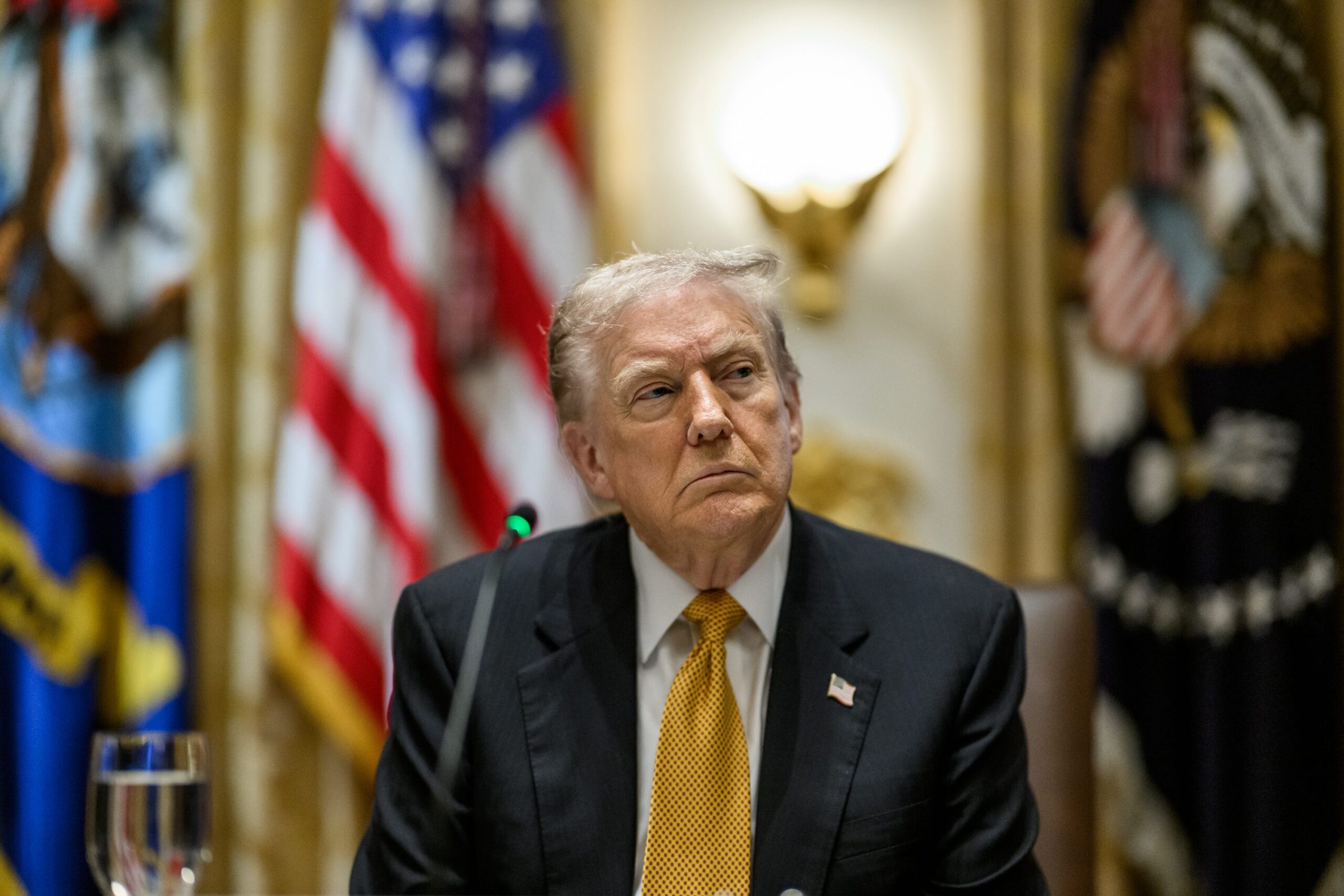
Photo: President Donald Trump hosts a bilateral lunch meeting with Hungarian Prime Minister Viktor Orban in the Cabinet Room, Friday, November 7, 2025. (Official White House Photo by Daniel Torok)